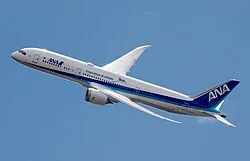
Japan’s aviation landscape is shifting as ANA Holdings launches a strategic reorganisation of its cargo operations following the acquisition of Nippon Cargo Airlines (NCA). The move creates Japan’s largest combined passenger and cargo carrier and signals a new approach to air freight in the Asia-Pacific region.
The reorganisation, targeted for completion by March 2027, aims to merge cargo functions from both airlines into a unified operation whilst maintaining separate air operator certificates. This structure will accelerate decision-making and optimise cost structures across the combined network.
Strategic Acquisition Creates Market Leader
ANA Holdings completed the acquisition of Nippon Cargo Airlines on August 3, 2025, purchasing the carrier from NYK and establishing Japan’s largest combined passenger and cargo airline group.
The combined operation brings together ANA’s extensive passenger network and belly capacity with NCA’s long-haul dedicated freighter fleet. ANA operates 238 aircraft across 94 destinations, supported by a cargo operation that includes both freighters and widebody passenger services. NCA adds significant long-haul lift through its Boeing 747 freighter operations, strengthening capacity on key intercontinental trade lanes.
Together, the group creates a cargo platform with scale, flexibility, and reach across Asia, North America, and Europe.
Total dedicated freighter aircraft across the combined group: 15
Early Integration Delivers Results
The two carriers launched cargo codeshare flights on October 26, 2025, covering major routes between Japan and North America and Europe. This initial collaboration has already generated operational improvements.
Shared cargo space utilisation began immediately after acquisition, allowing both airlines to maximise capacity on key trade lanes. At Los Angeles International Airport and Chicago O’Hare Airport, cargo handling operations have consolidated into NCA’s existing facilities. This eliminates duplication and reduces ground costs.
“The customer will be able to access all the capacity operated by the combined network through one sales channel, and one cargo handling terminal at each airport, as if ANA and NCA were one airline, while also maintaining the two air operator certificates.”
One Network, One Sales Channel
The integration delivers a simplified commercial model for customers. Freight forwarders and shippers gain access to the full combined capacity through a single sales channel at each airport, supported by consolidated cargo handling operations.
This unified approach reduces booking complexity and improves operational efficiency. Capacity across passenger belly and freighter services can be accessed seamlessly across the combined network, while ground handling is streamlined into one terminal per location.
Addressing Structural Challenges
ANA has identified fragmentation within its existing cargo organisation as a constraint on growth. Cargo-related functions including scheduling, sales, handling, systems, and accounting have historically operated across separate departments, slowing decision-making and limiting alignment between commercial and operational priorities.
The reorganisation consolidates these functions under unified cargo leadership across the group. This structure is designed to accelerate decisions on capacity deployment, pricing, and service development while improving cost efficiency through shared systems and processes.
“Recognizing the cargo business as an indispensable pillar of the group’s sustainable growth, ANA HD has conducted extensive analysis to define the optimal organizational structure to create synergies between ANA and NCA.”
Maintaining Operational Flexibility
NCA will retain its Air Operator Certificate (AOC) separate from All Nippon Airways. This regulatory structure preserves operational flexibility whilst allowing commercial integration. Both carriers continue to operate from their existing bases: ANA from Tokyo Haneda and NCA from Tokyo Narita.
The dual-AOC model enables the combined entity to optimise network design without regulatory constraints. Dedicated freighter routes and passenger belly capacity can be deployed independently based on market demand.
Market Implications
The reorganisation positions ANA Holdings to compete more effectively in Asian air cargo markets. The combination of NCA’s large freighter fleet with ANA’s extensive passenger network creates route flexibility that few carriers can match.
Key trade lanes between Japan and North America and Europe see immediate capacity improvements. Multi-carrier, multi-leg routing becomes simpler when accessing the combined network through one channel.
What This Means for Freight Forwarders
For independent freight forwarders, the reorganisation improves access to Japanese origin capacity on major intercontinental trade lanes. A unified sales structure simplifies quoting, booking, and capacity planning across both freighter and passenger networks.
Consolidated handling at major gateways reduces operational handoffs and improves cargo flow, supporting more reliable transit times and lower handling risk. While overall market capacity remains tight, the combined ANA and NCA platform offers forwarders greater visibility and flexibility when securing lift.
Implementation Timeline
Strategic evaluations continue as ANA Holdings refines the organisational structure. Specific implementation details will be determined through FY2026, with full completion targeted for March 2027.
The extended timeline reflects the complexity of integrating two established carriers with different operating models and systems. Freight, sales, technology and ground handling platforms must be aligned without disrupting current operations.
Further announcements on specific entities and structural changes will follow as planning progresses.
Strategic Foundation for Growth
The reorganisation establishes ANA Holdings as a dominant force in Japanese air cargo. By combining dedicated freighter capacity with extensive passenger network reach, the group creates operational flexibility and cost efficiency that strengthens its competitive position.
For cargo solutions providers, the integration offers clearer access to Japanese capacity on global routes. Simpler booking, unified handling and consolidated operations deliver the speed and efficiency that independent forwarders need to compete.
The market now watches implementation. Success depends on execution speed and the ability to maintain service quality whilst integrating two complex operations.