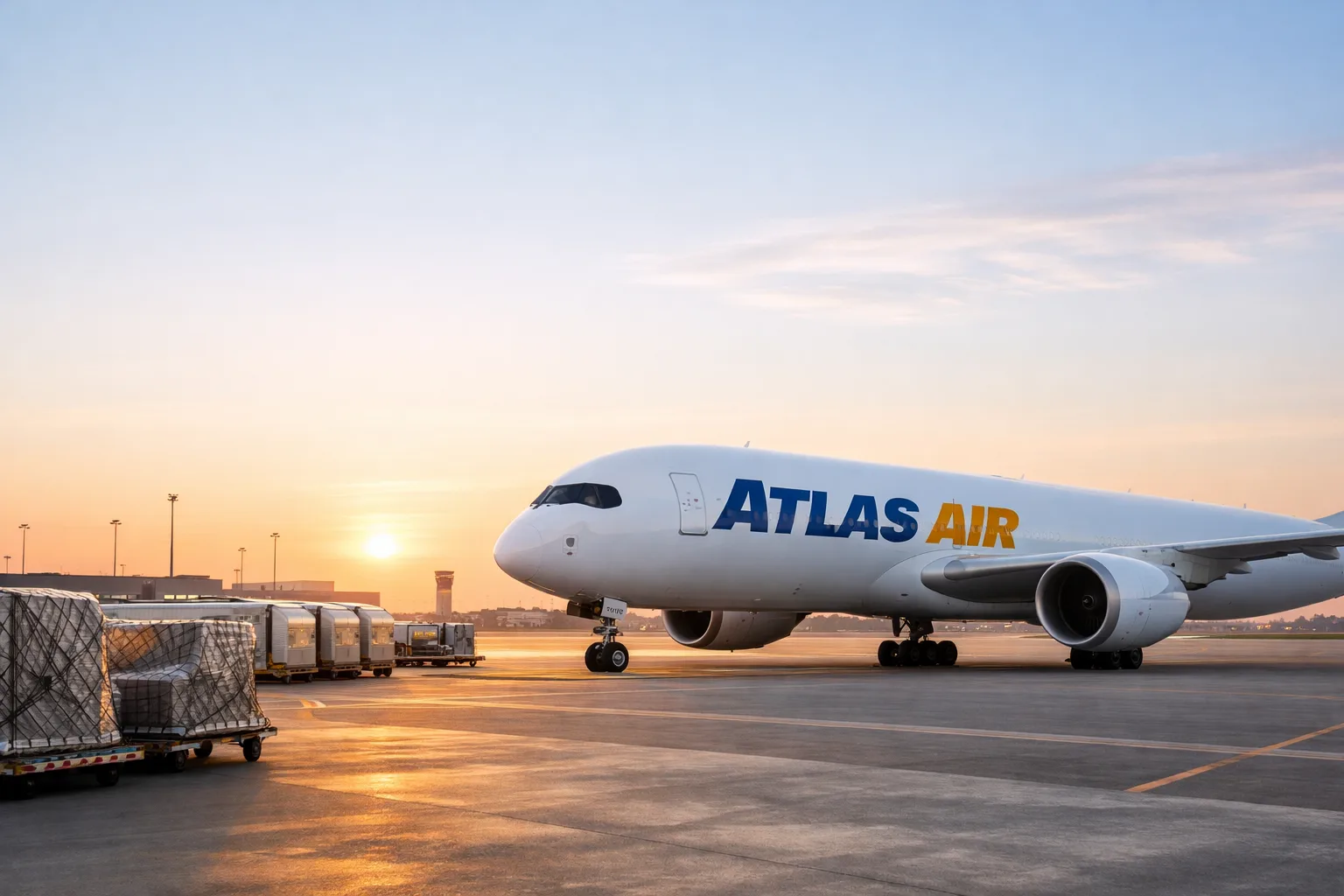
Atlas Air Worldwide has committed to 20 Airbus A350 freighters with options for 20 additional aircraft, becoming the largest customer for Airbus’ cargo programme. Deliveries start in 2029 and run through 2034.
The order signals a major fleet expansion for the global cargo operator. It follows more than two years of analysis comparing Airbus and Boeing platforms.
Why Atlas Air Chose the A350F
The A350F beat Boeing’s competing 777-8 freighter on three key factors: earlier delivery slots, lower fuel burn, and full compliance with ICAO’s 2027 CO₂ emissions standards.
“The A350F provides lower carbon emissions, reduced fuel burn, strong payload capability, and long range. Importantly, we will get these aircraft earlier than we would have otherwise, which supports our growth plans.”
– Michael Steen, CEO of Atlas Air Worldwide
The aircraft is powered by Rolls-Royce Trent XWB-97 engines and features the largest main deck cargo door in the widebody freighter market.
Fleet Expansion, Not Replacement
Atlas Air currently operates 113 aircraft, including 747-400s with an average age of 24.5 years. The new A350Fs will support growth, not retire existing capacity.
Steen confirmed no near-term retirements are planned. The first batch of deliveries will add capacity to meet rising demand.
Market Context: Airbus vs Boeing
Airbus has now secured 81 firm orders for the A350F from 13 customers globally. Boeing’s 777-8F has captured 68 firm orders from seven customers.
Atlas Air’s decision to join the Airbus customer base marks a shift for the carrier, which has traditionally operated Boeing widebodies including 747s, 777s, and 767s.
Long-Term Cargo Demand Outlook
Atlas Air remains confident in long-term air cargo growth despite global economic uncertainty. Steen pointed to ocean freight disruptions as a driver of increased air cargo demand.
“Ocean freight disruptions are likely to drive more demand for air cargo. These assets will be in service for decades, and while there will be cycles, we expect demand to grow over time.”
– Michael Steen, CEO of Atlas Air Worldwide
What This Means for Forwarders
More widebody freighter capacity on key lanes means more options for cargo solutions providers. The A350F enters service in 2027, with Atlas Air capacity available from 2029.
Forwarders booking capacity on Atlas Air routes will benefit from:
- Lower fuel burn and potential cost efficiencies passed through rates
- Enhanced environmental compliance meeting stricter emissions standards
- Expanded capacity on long-haul routes Atlas Air serves
- Modern technology improving reliability and performance
The order reinforces Atlas Air’s position as the world’s leading widebody freighter operator and signals sustained investment in cargo aircraft.
Lars Wagner, CEO Commercial Aircraft at Airbus, welcomed Atlas Air to the A350F customer base, committing to a long-term partnership as the new platform enters service.