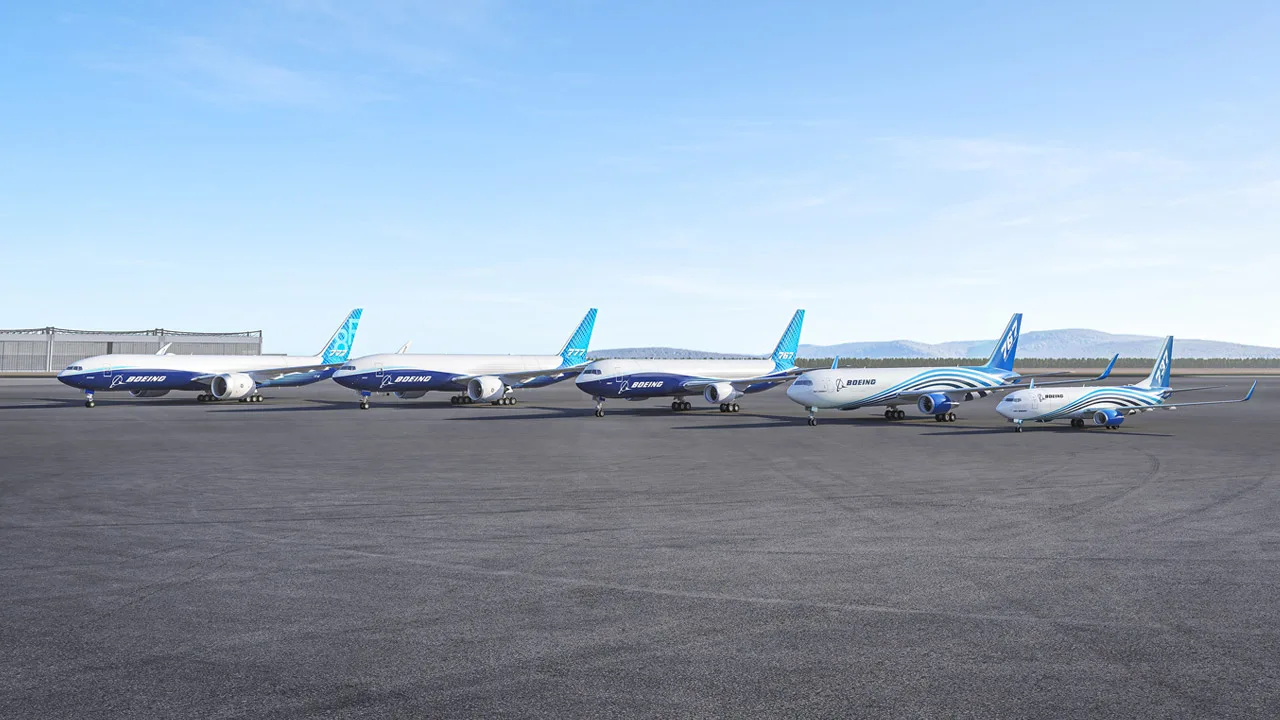
Boeing has formally petitioned the US Department of Transportation for an emissions exemption to continue delivering 777F freighters beyond the December 31, 2027 regulatory deadline. The request, filed on December 19, 2025, seeks approval to sell 35 additional aircraft before the next-generation 777-8F enters service.
Regulatory Deadline Creates Production Gap
Under 14 CFR §38.1 and 40 CFR 1030.1, aircraft exceeding specified fuel-efficiency limits cannot receive FAA Certificates of Airworthiness after January 1, 2028. The current 777F model falls outside these standards, forcing Boeing to halt production unless granted an exemption.
The US FAA finalised its ‘Airplane Fuel Efficiency Certification’ rule requiring new aircraft produced after this date to meet improved fuel efficiency standards. Boeing’s 777F and other models including the 777X are directly impacted. Aircraft already in service face no restrictions under the new regulations.
777-8F Delays Drive Exemption Need
Boeing originally anticipated the 777-8F would enter service in 2027. The company pushed this timeline back to 2028 in October 2024, and recent reports suggest the entry-into-service date may slip to 2029 due to adjusted timelines for the 777-9 programme.
This delay creates a critical gap in Boeing’s freighter production capability. Without the exemption, no large widebody freighters would be available from Boeing between January 2028 and the 777-8F’s service entry.
“The requested relief will allow Boeing to meet anticipated customer demand and support the substantial public interest in the sustained transportation of air cargo prior to the 777-8F entering service.”
Market Impact and Customer Demand
The 777F currently serves as the only large widebody freighter in production. With 310 active 777-200F aircraft operating globally, the model plays a central role in air cargo operations. FedEx Express operates the largest fleet of these aircraft.
Boeing’s exemption request addresses real market need. In 2024 alone, air cargo transported $600 billion in goods, with more than $260 billion moving on large widebody freighters. The company argues that halting 777F production would create capacity shortages during peak demand periods.
Strong Order Book for Next Generation
Market confidence in the 777-8F programme remains solid. Since Boeing launched the programme in 2022, customers have ordered 63 aircraft from six airlines. Recent activity includes:
- Qatar Airways serves as launch customer with 34 orders
- China Airlines expanded its order by 4 units to 8 aircraft total
- Cargolux ordered 10 aircraft
- Lufthansa Cargo committed to 7 units
These orders demonstrate sustained demand for fuel-efficient, large widebody freighter capacity. The 777-8F will meet all current and anticipated fuel efficiency standards when it enters service.
Regulatory Timeline and Approval Process
Boeing has requested approval of the exemption petition by May 1, 2026. This timeline would allow sufficient lead time for production planning and customer delivery schedules.
The US DOT will evaluate whether granting the exemption serves public interest. Boeing’s argument centres on three key points:
- Meeting customer demand for air cargo capacity
- Supporting global trade flows during the transition period
- Bridging the gap until compliant 777-8F aircraft become available
Industry Context and Implications
The exemption request highlights broader challenges facing aircraft manufacturers as environmental regulations tighten. Boeing must balance immediate market demand against long-term sustainability requirements.
For freight forwarders and cargo operators, the regulatory situation creates planning complexity. Operators evaluating fleet expansion must weigh the benefits of immediate 777F availability against future-proofing with 777-8F orders.
Impact on Capacity Planning
The potential 35-aircraft extension could help address anticipated capacity shortages in key cargo markets. The additional deliveries would also mitigate commercial impact from 777-8F programme delays.
Current 777F operators face no restrictions. The fuel efficiency requirements apply only to newly manufactured aircraft, leaving the existing global fleet of 310 aircraft unaffected.
What This Means for Cargo Operations
Boeing’s exemption request reflects the critical role large widebody freighters play in global supply chains. The 777F provides essential capacity on long-haul routes where cargo volumes justify dedicated freighter operations.
If approved, the exemption would maintain production continuity through the transition to next-generation technology. Cargo solutions providers could continue accessing new 777F capacity while awaiting the more efficient 777-8F.
The situation demonstrates how regulatory changes drive technology advancement in aviation. Fuel efficiency standards push manufacturers toward cleaner designs whilst exemption processes provide transition pathways for established programmes.
Looking Ahead
The DOT’s decision will set important precedent for managing regulatory transitions in aircraft production. Boeing’s request balances immediate operational needs against environmental objectives.
For the air cargo sector, continued 777F availability through 2028 and beyond would provide stability during a period of supply chain evolution. The exemption would give operators time to evaluate 777-8F performance data before committing to fleet transitions.
As regulatory deadlines approach, the industry watches closely. The outcome will influence production planning, fleet strategy and capacity availability across global cargo networks.