US Lifts Caribbean Airspace Restrictions After 24-Hour Closure
US authorities lifted Caribbean airspace restrictions at midnight ET on Saturday, 4 January, clearing the way for cargo and passenger flights to resume after a 24-hour closure that grounded hundreds of flights and stranded thousands of travellers.
The Federal Aviation Administration (FAA) imposed the restrictions following a US military operation in Venezuela that resulted in the capture of President Nicolas Maduro. The closure caused immediate disruption across the region, affecting cargo movements and passenger services on key Caribbean routes.
Immediate impact on flight operations
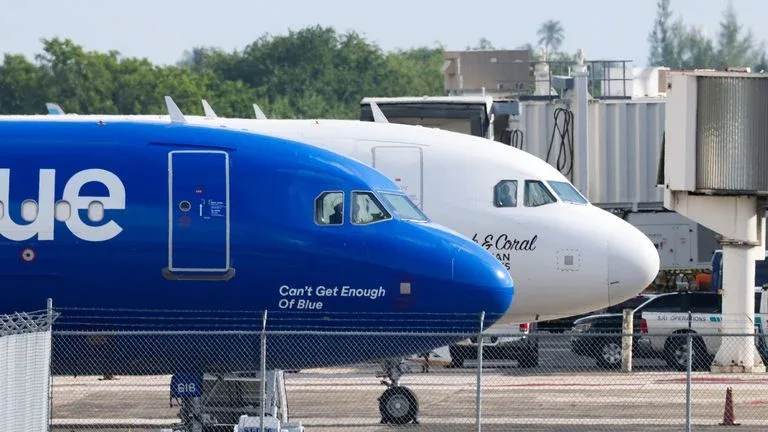
Major US carriers cancelled hundreds of flights during the closure. JetBlue alone cancelled 215 flights, while United Airlines, American Airlines, Delta Air Lines, Frontier Airlines, and Spirit Airlines all grounded Caribbean services.
The FAA closed the airspace citing “safety-of-flight risks associated with ongoing military activity”. Airlines operating near the region were warned to avoid flying within 100 miles of Venezuelan airspace due to potential risks from anti-aircraft weaponry and heightened military activity.
215 flights cancelled by JetBlue during the airspace closure
Return to normal operations
US Transportation Secretary Sean Duffy announced the lifting of restrictions, stating:
“The original restrictions around the Caribbean airspace are expiring at 12:00am ET (0500 GMT) and flights can resume. Airlines are informed and will update their schedules quickly.”
United Airlines moved first, planning to resume flights to San Juan, Puerto Rico on Saturday night. The carrier confirmed: “We expect to operate most scheduled flights to the region for Sunday.” Delta Air Lines said it expected to return to its normal Caribbean schedule by Sunday.
Recovery challenges for cargo and passenger services
Despite the swift reopening, airline analyst Robert Mann warned that full recovery would take time. “They have a day’s worth of passengers already stranded in the Caribbean,” he said.
The disruption affects cargo operators on several levels:
-
Stranded freight: A full day of cargo movements delayed across Caribbean routes
-
Aircraft repositioning: Carriers must return aircraft to scheduled rotations
-
Crew scheduling: Flight crews require repositioning after grounded operations
-
Knock-on delays: Cascading effects on connecting services beyond the Caribbean region
International carriers respond
The restrictions extended beyond US airlines. European and South American carriers also cancelled flights to the region. Air Canada said it would “update as required if the situation changes”, indicating continued monitoring.
Commercial air traffic over Venezuelan airspace stopped completely following the military operation, forcing carriers to reroute services around the affected zone.
Risk assessment and safety warnings
The FAA issued specific warnings to both US and international operators. British carriers received alerts citing “potential risk from anti-aircraft weaponry and heightened military activity” within 100 miles of Venezuelan airspace.
“Safety-of-flight risks associated with ongoing military activity remain the priority for all Caribbean operations.”
These warnings follow a November incident in which a JetBlue aircraft experienced a near mid-air collision with an aerial refuelling tanker near Venezuela, highlighting existing risks in the region prior to the latest events.
Geopolitical background
President Donald Trump announced that Nicolas Maduro had been captured during the operation. Maduro is currently held at a New York detention facility pending drug-related charges. Trump accused the Venezuelan leader of overseeing narcotics shipments into the US and maintaining power through election fraud.
Cuba reported that 32 of its combatants were killed during the US intervention in Venezuela, underlining the scale of military activity that triggered the airspace closure.
Trump stated that US forces would be deployed if necessary to maintain control over Venezuela, signalling the potential for continued regional instability that could affect Caribbean flight operations.
What this means for cargo operators
Freight forwarders handling Caribbean cargo should continue to monitor developments closely. Key considerations include:
-
Route planning: Maintain alternative routing options for Caribbean services
-
Partner communication: Keep capacity partners and clients informed of potential delays
-
Documentation readiness: Prepare for possible customs delays as backlogged cargo clears
-
Contingency pricing: Build flexibility into quotes for routes transiting near Venezuelan airspace
Network resilience matters
Events like this highlight the importance of access to multiple carriers and routing options. The ability to compare alternatives and secure capacity quickly becomes critical when geopolitical events disrupt established trade lanes.
SME freight forwarders without regional branch networks face heightened exposure. Digital tools that provide real-time visibility of available capacity across multiple carriers can make the difference when disruption occurs.
Looking forward
Airlines confirmed that several days will be required to fully restore normal operations. Repositioning aircraft, rescheduling crews, and clearing the backlog of stranded passengers and cargo will require coordinated effort across the industry.
The FAA said it will continue monitoring the situation and reintroduce restrictions if required. Transportation Secretary Duffy stated that curbs would be reinstated “when appropriate” should safety risks re-emerge.
For cargo solutions providers, the incident reinforces a key lesson. Geopolitical risk affects Caribbean routes just as it does other regions. Operational flexibility and access to alternative capacity reduce exposure when unexpected closures occur.
The Caribbean remains a critical region for cargo flows. Fast access to live rates, vetted partners, and multi-carrier booking capability helps operators respond quickly when disruption strikes and services resume.