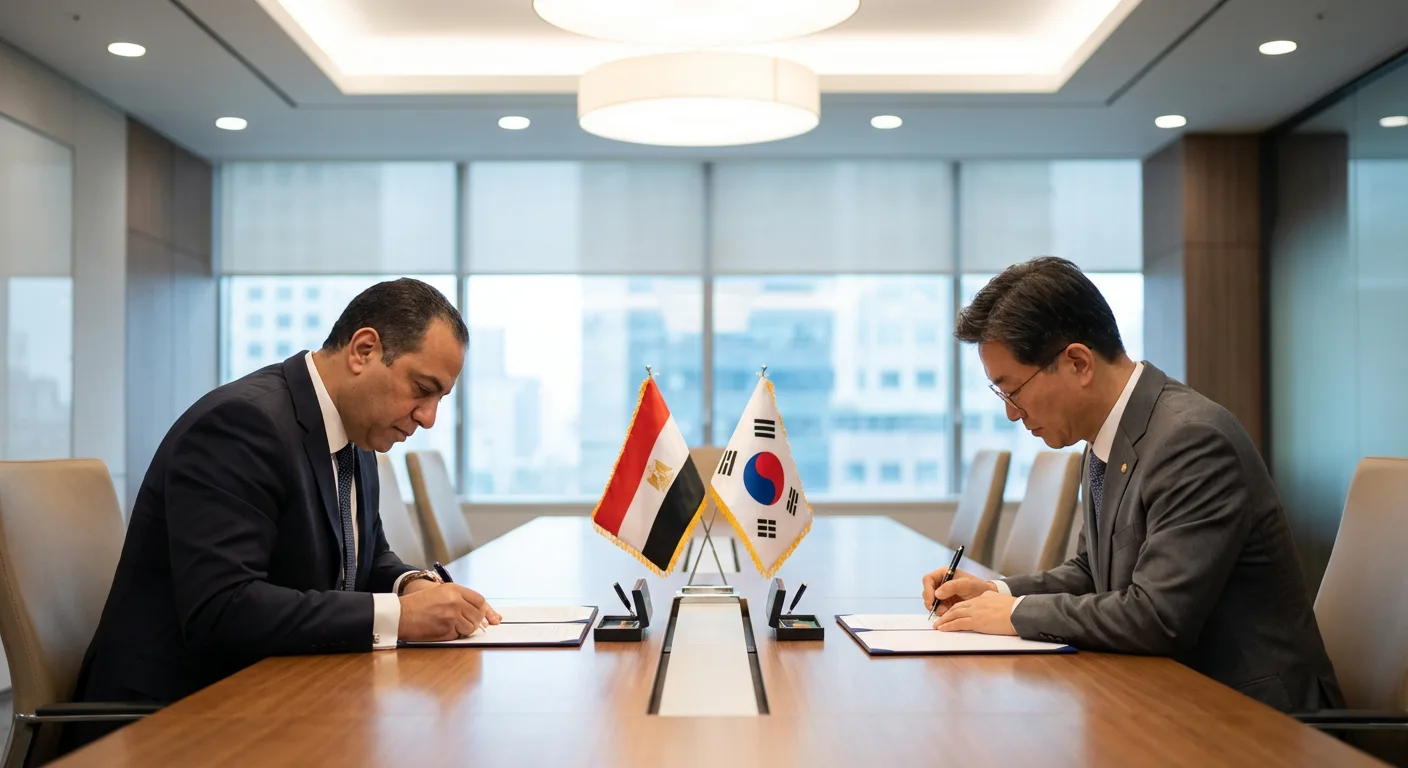
Egypt has signed a cooperation agreement with South Korea to upgrade customs technology and strengthen logistics processes, marking a significant step in the country’s push to become a competitive manufacturing and export hub serving Africa, Europe and Asia.
The Egyptian Customs Authority (ECA) and Korea Customs Service (KCS) finalised the memorandum of understanding on December 23, 2025, following technical meetings between delegations from both customs authorities. The partnership targets faster clearance times, improved service delivery and direct support for cross-border e-commerce operations.
Modernisation through Korean technological expertise
The agreement centres on developing information and communications technology systems using South Korea’s proven expertise in smart systems, e-commerce platforms and modern logistics services. Technical cooperation will focus on raising efficiency across customs operations whilst supporting the growth of e-commerce-linked supply chains.
Ahmed Amoui, Head of the Egyptian Customs Authority, confirmed the agreement’s scope: “The MoU aims to enhance efficiency across customs operations while supporting the growth of e-commerce-linked supply chains.”
During preparatory meetings last week, the Korean delegation reviewed Alexandria’s technology ecosystem and e-commerce operations, identifying areas where South Korea’s digital capabilities could accelerate Egypt’s transformation.
Capacity building and integrated logistics for express cargo
The partnership includes structured capacity-building programmes for customs staff and improvements to integrated logistics systems for express mail and parcel shipments. These measures will directly impact cross-border e-commerce by supporting faster processing of cargo flows and aligning Egypt’s e-commerce ecosystem with international standards.
KCS Commissioner Lee Myung-koo emphasised the mutual benefits: “South Korea looks forward to exchanging technical and technological expertise with Egypt to support digital transformation and the growth of e-commerce.”
The training component addresses practical workflows that customs teams encounter daily. Staff will gain exposure to digital-first tools and procedures that reduce manual intervention and shorten quote-to-clearance cycles.
Customs reform as economic anchor
Customs modernisation is a key pillar of Egypt’s programme with the International Monetary Fund. The country aims to simplify procedures, digitise documentation and improve trade facilitation as part of broader economic reforms designed to attract investment and expand manufacturing capacity.
“The deal would help raise the efficiency of the customs system, improve services for the business community, and shorten clearance times, contributing to a more competitive business environment.”
— Ahmed Amawi, ECA Chairman
Amoui also noted that the partnership reflects Egypt’s broader digital transformation strategy and its push to expand technical cooperation with international partners. The initiative aligns with wider customs facilitation measures focused on digitisation and simplified procedures.
Trade performance highlights urgency of logistics reform
Despite export growth of 28.2 per cent to $4.9 billion in September 2025, Egypt’s overall trade contracted by 27.6 per cent year on year to $3.3 billion in the same month. The divergence between rising exports and falling overall trade underscores the urgent need for logistics and customs reforms that can support consistent, competitive performance.
Faster clearance times and improved digital infrastructure will help freight forwarders and cargo solutions providers quote complex routes more quickly, book capacity with confidence and track shipments in real time. For independent forwarders serving Egyptian trade lanes, these improvements mean shorter quote-to-book cycles and better visibility across multi-leg movements.
What this means for cargo solutions providers
The Egypt-South Korea customs digitisation pact will create measurable improvements for forwarders operating on Egyptian trade lanes:
- Shorter clearance times: Reduced dwell times at ports and airports will tighten transit schedules and improve delivery predictability.
- Digital documentation: Digitised customs workflows will cut manual paperwork and speed up cargo release.
- E-commerce integration: Enhanced systems for express mail and parcels will support growing demand for cross-border e-commerce logistics.
- Aligned standards: Egypt’s shift towards international customs standards will simplify compliance for forwarders managing mixed-origin shipments.
- Trained staff: Capacity-building programmes will improve on-the-ground service quality and consistency.
Regional implications for trade flows
Egypt’s strategic location and ambition to serve as a manufacturing and export hub connecting Africa, Europe and Asia make customs efficiency critical. Improved digital infrastructure will strengthen Egypt’s competitiveness as a gateway for cross-regional cargo flows, particularly for forwarders managing multi-leg routes that transit Egyptian ports and airports.
The partnership also signals Egypt’s commitment to leveraging international expertise to solve practical logistics challenges. For cargo solutions providers, this approach creates opportunities to work with a customs environment that is actively modernising and aligning with global best practices.
Looking ahead
The Egyptian Customs Authority and Korea Customs Service will now move into implementation, focusing on system development, staff training and phased rollout of digital tools. The partnership’s success will be measured by clearance times, processing accuracy and the growth of e-commerce-linked cargo volumes.
For freight forwarders and cargo solutions providers, the message is clear: Egypt is investing in the infrastructure needed to compete globally. Faster quotes, simpler booking and better tracking are within reach. The local hero can now operate as a global hero.