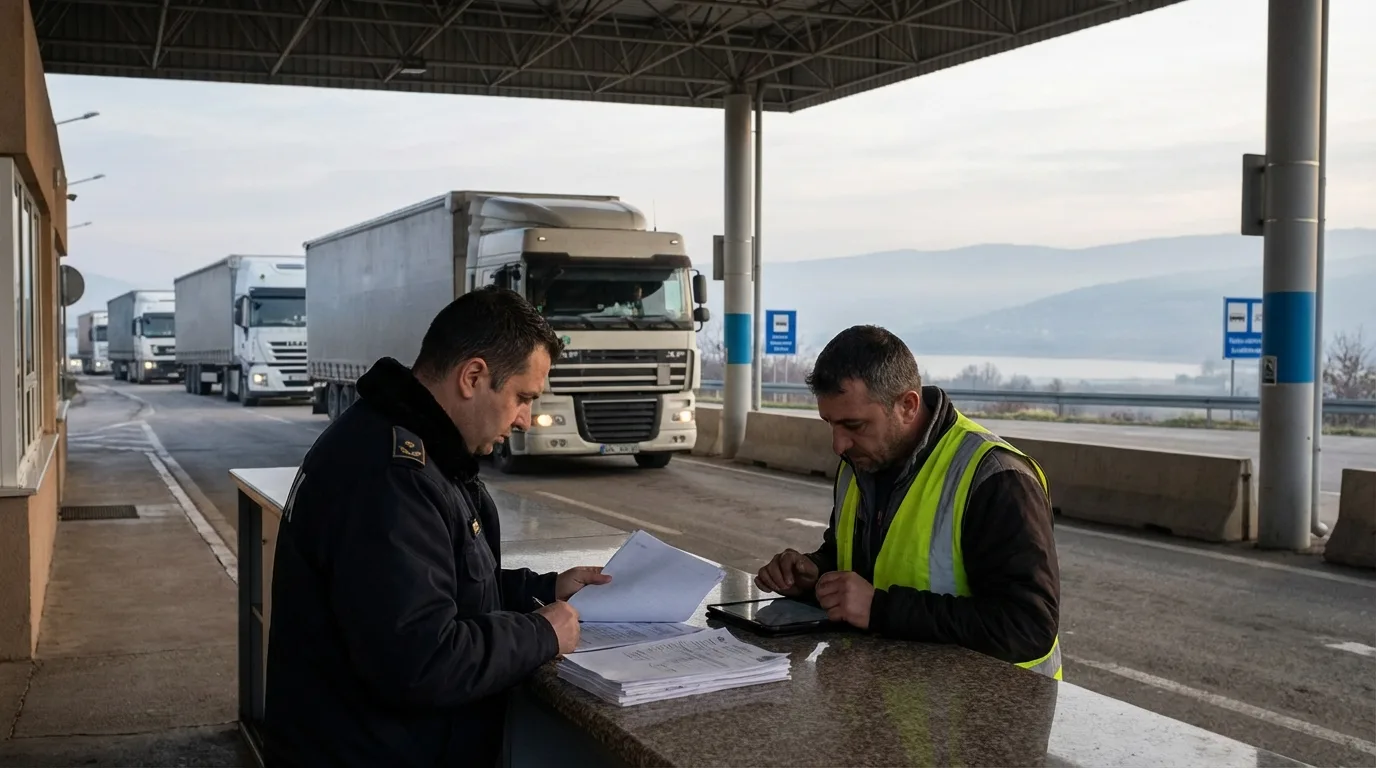
The Federal Motor Carrier Safety Administration (FMCSA) published its final rule on non-domiciled commercial driver’s licenses on February 13, 2026. The rule takes effect March 16, 2026, reshaping who can hold a non-domiciled CDL in the United States.
For cargo solutions providers, freight brokers and forwarders working port, border and metro lanes, this rule demands immediate attention. Capacity will tighten. Documentation requirements will expand. Compliance exposure will grow.
What Changed and When It Hits
Non-domiciled CDLs are issued to individuals legally authorised to work in the U.S. but who don’t permanently reside in the state issuing the license. Previously, many states issued these licenses with minimal oversight, accepting Employment Authorisation Documents (EADs) as sufficient proof.
That ends now.
The final rule restricts non-domiciled CDL eligibility to three specific visa categories only: H-2A (agricultural workers), H-2B (temporary non-agricultural workers), and E-2 (treaty investors). EADs are no longer accepted. Asylum seekers, refugees, DACA recipients and holders of Temporary Protected Status are excluded from eligibility.
State Driver’s Licensing Agencies (SDLAs) must now verify every applicant’s immigration status using the Systematic Alien Verification for Entitlements (SAVE) system. All issuance, transfers, renewals and upgrades must occur in person. Credentials are limited to the immigration document’s expiration with a maximum of one year and are renewable only with updated proof.
States must retain document copies and SAVE queries for at least two years and produce them within 48 hours upon FMCSA request. If immigration status changes or eligibility lapses, SDLAs have 30 days to downgrade or revoke licenses.
Why FMCSA Pushed This Through
FMCSA Administrator Derek Barrs framed the rule as closing a critical safety gap:
“A critical safety gap allowed unqualified drivers with unknown driving histories to get behind the wheel of commercial vehicles. We are closing that gap today to ensure that only qualified, vetted drivers are operating on our nation’s roadways. If we cannot verify your safe driving history, you cannot hold a CDL in this country.”
– Derek Barrs, FMCSA Administrator
The agency cited 17 fatal crashes in 2025 resulting in 30 deaths involving non-domiciled CDL holders who would be ineligible under the new rule. FMCSA argues that while U.S. drivers are subject to strict checks through national databases for past violations, states lack the ability to access foreign driving records.
The Owner-Operator Independent Drivers Association (OOIDA) supported the rule. OOIDA President Todd Spencer stated:
“For too long, loopholes in this program have allowed unqualified drivers onto our highways, putting professional truckers and the motoring public at risk. This final rule is a major step toward safer roads, stronger accountability, and a more professional trucking industry.”
– Todd Spencer, OOIDA President

The Workforce Impact: Gradual, Not Sudden
FMCSA initially projected a sudden loss of approximately 194,000 drivers. After receiving over 8,000 public comments (the majority opposing the rule), the agency revised its economic analysis.
Most properly issued non-domiciled CDLs have five-year terms, not two years as originally assumed. This means the workforce reduction will unfold gradually as existing licenses expire.
The revised projections show:
- 40,000 drivers per year expected to exit over the next five years
- Only 6,000 drivers annually expected to qualify under the restricted H-2A, H-2B and E-2 visa categories
- A net annual reduction of approximately 34,000 drivers as credentials expire
Drivers with current valid licenses can continue operating until their current license expires. States are not required to cancel validly issued non-domiciled licenses, but must apply the new eligibility standards at the next licensing transaction following the effective date.
Legal Challenges Continue
An emergency version of the rule was issued in September 2025 but was temporarily stayed by the U.S. Court of Appeals for the D.C. Circuit on November 10. The court found FMCSA had bypassed legally required rulemaking procedures.
Plaintiffs filed a new lawsuit on February 12, 2026 in the D.C. Circuit challenging the final rule. The rule is nearly certain to face further appeals and possible requests to stay implementation.
FMCSA will likely oppose any stay request, citing what it calls “widespread and systematic failures” in the non-domiciled issuance process. The agency argues that “enhanced vetting and interagency screening required for the identified visa holders serves as a functional proxy for driver history vetting otherwise required for U.S. drivers.”
What Cargo Solutions Providers Must Do Now
For freight forwarders, brokers and logistics providers, the rule shifts operational risk onto your shoulders, particularly in affected labour markets.
Immediate Actions
Audit carrier profiles for non-domiciled driver exposure. Identify which carriers in your network rely on drivers who may lose eligibility. Port drayage, border crossings and dense metro lanes face the highest risk.
Require updated eligibility attestations. Carriers must confirm their drivers meet the new requirements. Document this confirmation and update it regularly.
Tag high-exposure lanes in your TMS. Flag routes likely to experience capacity constraints. Monitor spot rates closely in these corridors.
Verify driver documentation at onboarding and renewal. If carrier documentation is outdated or driver eligibility cannot be verified quickly, your compliance exposure grows.
Longer-Term Planning
Capacity tightening from licensing changes may push spot rates higher in affected lanes. Port, border and short-haul metro routes are expected to see the most impact.
Modern TMS platforms provide centralised carrier onboarding, document tracking and compliance visibility. These tools help brokers manage documentation requirements and flag carriers whose driver pools may be affected.
The Bottom Line
FMCSA’s final rule on non-domiciled CDLs is locked in. It takes effect March 16, 2026. Eligibility is now limited to H-2A, H-2B and E-2 visa holders only.
For cargo solutions providers, this means tighter capacity, stricter documentation and higher compliance risk in affected lanes. The impact will unfold over five years, not overnight, but the time to prepare is now.
Audit your carrier network. Update your documentation processes. Tag your high-risk lanes. The rule is live, and the clock is running.