India’s Logistics Sector Emerges Stronger After a Volatile 2025
India’s logistics sector emerged from 2025 battle-tested and stronger. Despite geopolitical tensions and ongoing supply chain disruptions, the country’s freight ecosystem delivered consistent performance across multiple trade corridors.
The year highlighted a critical shift. Air cargo moved from being an emergency fallback to a strategic backbone. For freight forwarders navigating volatile trade routes, speed and flexibility became non-negotiable advantages.
Air freight outperforms as uncertainty reshapes demand
Air cargo dominated performance metrics across India’s logistics landscape. The segment recorded the strongest growth among all freight modes, driven by sustained demand from electronics, pharmaceuticals, perishables, and express cargo.
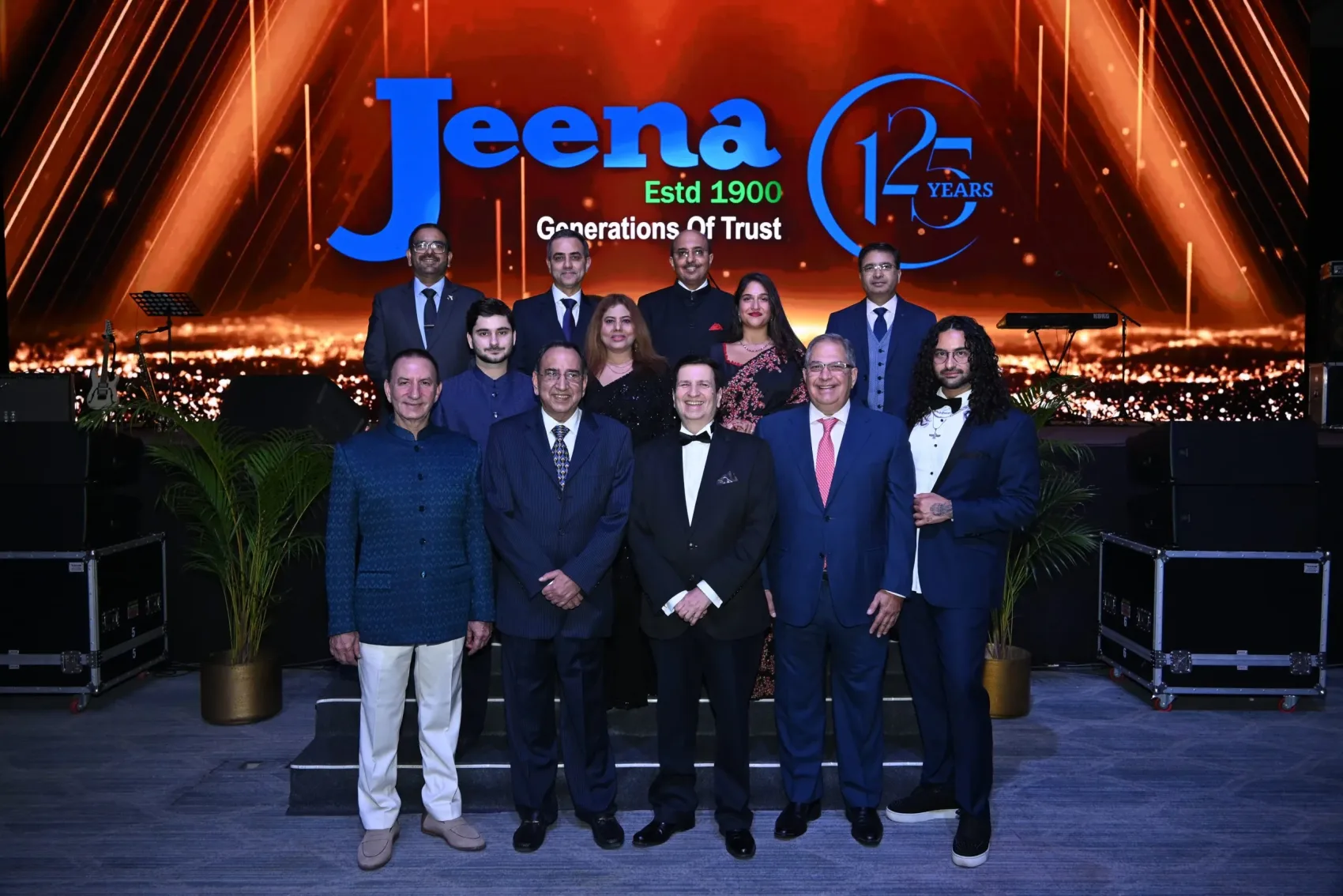
Jeena & Company, founded in 1900 and operating across 60 countries with 27 offices in India, reported business volume growth despite global trade volatility. The company’s air freight segment led this performance.
“2025 reinforced the importance of agility and preparedness in logistics. Air cargo, in particular, played a critical role in supporting customers during periods of heightened uncertainty.”
Prediman Koul, Chief Executive Officer, Jeena & Company
Red Sea route diversions triggered a cascading impact across global supply chains. Shippers seeking faster alternatives turned to air freight in record numbers. What began as a tactical response evolved into a strategic preference for time-sensitive and high-value shipments.
Kami Viswanthan, President, Middle East, Indian Subcontinent and Africa, FedEx, reinforced this trend, noting that sustained air cargo growth reflects continued confidence in India’s role as a manufacturing and export hub.
Infrastructure execution accelerates across transport modes
The PM GatiShakti Master Plan progressed from blueprint to execution throughout 2025. Coordination improved across road, rail, air, and ports, reducing bottlenecks that previously slowed multimodal freight movement.
This integrated infrastructure planning laid the foundation for greater operational resilience. Freight forwarders gained access to more reliable networks and faster routing options across both domestic and international corridors.
70% share of inland cargo moved by road freight in India
While air cargo captured attention, road freight continued to dominate inland movement, accounting for more than 70 percent of domestic cargo volumes. Sea freight also recorded steady growth, supported by stable import and export flows through Indian ports.
The importance of a multimodal approach became increasingly clear. Companies that maintained flexibility across transport modes navigated disruptions more effectively than those dependent on single-mode strategies.
Digital tools deliver real-time advantage
Technology adoption accelerated across India’s logistics ecosystem. AI-enabled systems improved planning, routing, automated handling, and shipment visibility for major logistics providers, including FedEx.
Jeena & Company implemented digital tools that delivered real-time shipment visibility and predictive disruption alerts. These systems enabled proactive responses rather than reactive crisis management.
“2025 has been one of the most dynamic years for global trade. In this environment, agility has become critical.”
Nitin Navneet Tatiwala, Vice President, Marketing, Customer Experience and Air Network, MEISA, FedEx
Competitive advantage increasingly shifted toward operators that could anticipate disruption rather than simply respond to it. Digital readiness clearly separated market leaders from followers.
Quick-commerce proves last-mile infrastructure strength
India’s quick-commerce sector reached new maturity milestones in 2025. Zepto, founded in 2021, filed confidentially for an ₹11,000 crore ($1.22 billion) initial public offering, signalling strong investor confidence in ultra-fast delivery models.
Both Zomato and Blinkit recorded some of their highest-ever delivery volumes and fastest fulfilment speeds on 31 December 2025. Quick-commerce platforms now offer more than 45,000 products with delivery times as short as ten minutes.
These achievements demonstrated the robustness and scalability of India’s last-mile delivery infrastructure. Managing extreme demand spikes while maintaining ultra-fast speeds requires sophisticated logistics coordination and infrastructure depth.
Sustainability moves from aspiration to execution
Sustainability advanced from ambition to implementation across India’s logistics sector in 2025. DHL Express added “Green Logistics of Choice” as a fourth bottom line within its Strategy 2030 roadmap, backed by a €1 billion investment commitment in India.
Major logistics players integrated emissions tracking, green facilities, and cleaner transport solutions into core operations. Sustainability shifted from a marketing narrative to an operational priority.
Kuehne+Nagel embedded sustainability metrics across its India, Sri Lanka, and Maldives operations throughout the year.
Partnerships and agility define competitive edge
The year reinforced a fundamental truth. Resilience is built through collaboration, not forecasts. Companies that invested in partnerships and maintained operational flexibility consistently outperformed those relying solely on predictive models.
“The year underlined that resilience is built through shared intent and strong partnerships, not forecasts. Progress in logistics happens through people, partnerships, and shared purpose.”
Anish Jha, Managing Director, Kuehne+Nagel India, Sri Lanka and Maldives
Jeena & Company managed disruptions through route diversification, carrier coordination, scenario planning, and digital technology adoption. The company also expanded operations to Sydney as part of its global growth strategy.
Looking ahead: 2026 growth drivers
Jeena & Company remains optimistic about growth opportunities in 2026. Key drivers include:
-
Expanding trade activity across established and emerging corridors
-
Policy-led infrastructure development improving multimodal connectivity
-
Rising demand from automotive, pharmaceuticals, e-commerce, and defence sectors
-
Continued strength in air cargo as exporters prioritise speed and reliability
India’s logistics sector enters 2026 with proven operational resilience, improved digital infrastructure, and a demonstrated ability to navigate global trade volatility.
“India’s logistics ecosystem is undergoing a structural shift, supported by integrated infrastructure planning and faster execution across multimodal networks.”
For SME freight forwarders, the message is clear. Agility, digital readiness, and multimodal flexibility are no longer optional advantages. They are essential requirements in an industry where disruption has become the norm.
The companies that thrived in 2025 shared common characteristics. They invested in technology. They built strong carrier partnerships. They maintained flexibility across transport modes. And they prioritised customer continuity above all else.
Those lessons will shape competitive advantage in 2026 and beyond.