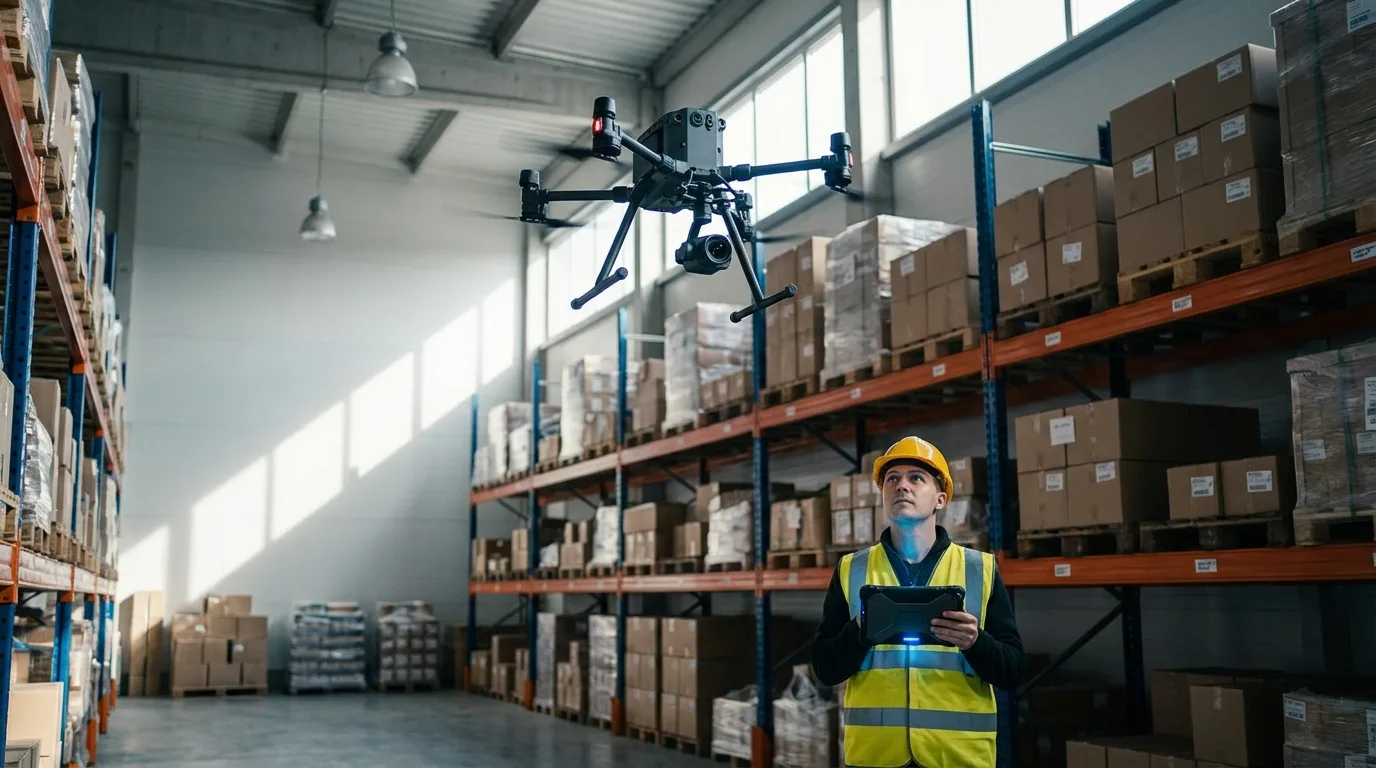
The warehouse floor is getting smarter. Physical AI-artificial intelligence embedded into robots, drones and autonomous machines-is turning static storage facilities into adaptive, intelligent operations that see, learn and act in real time.
Unlike traditional automation that follows rigid scripts, physical AI perceives its environment using computer vision and sensing. It adapts. It learns from human training. And it connects to networks of technologies and data sources to optimise operations continuously.
From blind spots to real-time intelligence
Global supply chains have operated with a fundamental problem: they couldn’t see what was actually happening on the warehouse floor. Digital inventory systems show what should be there. Physical AI shows what is there.
Gather AI, a Pittsburgh-based company founded by three Carnegie Mellon PhD students, raised $40 million in Series B funding in February 2026. The round, led by Smith Point Capital Management, brings total capital raised to $74 million.
The company uses drones and cameras mounted on material handling equipment to scan warehouses nightly. Computer vision models analyse images to identify pallets, barcodes, inventory levels, lot numbers, expiry dates, product damage and storage occupancy. The result: 99.9% inventory accuracy, up to 80% reduction in manual counting, and ROI within six months for many deployments.
“Global supply chains still rely on incomplete or outdated inventory data, and Gather AI solves that by providing continuous, automated visibility into what is actually happening inside warehouses.”
– Rob Rozicki, Head of Marketing, Gather AI
Customers including GEODIS, NFI Industries and Barrett Distribution are already deployed. Gather AI’s bookings grew 250% over the past year while operational footprint doubled.
Autonomous trucks join the network
Physical AI isn’t confined to warehouses. Uber Freight is integrating autonomous trucks powered by NVIDIA DRIVE AGX into live freight corridors, starting with a Texas route worth an estimated $3 billion annually.
The shift addresses critical pain points: driver shortages, rising costs and safety concerns. Partner estimates suggest 13%-32% savings in fuel consumption per loaded mile, potentially saving the logistics industry more than $6.8 billion each year.
50% of US freight miles could be autonomous by 2035
According to Adexin, 45% of supply chains confirmed the autonomous trend by 2035. More lanes are planned as the technology matures.

Smarter warehouses, safer workers
Physical AI reduces injury rates by relieving workers from hazardous tasks. Person-to-goods models using autonomous mobile robots (AMRs) cut unproductive walking time by more than half. Goods-to-person systems let robots deliver shelves or bins to stationary workers, improving throughput and safety.
Automated storage and retrieval systems-vertical, robot-operated structures-allow facilities to store more inventory in existing footprints. These systems are modular and can be installed in phases around ongoing operations.
Start small, scale fast
Experts recommend starting with a single bottleneck: cycle counting or automated goods movement. Integration with warehouse management systems (WMS) and warehouse execution systems (WES) is critical. Robots-as-a-service options shift investment from large capital expenditure to predictable operating costs.
Data quality remains a barrier. AI usefulness ratings from supply chain professionals averaged 8 out of 10, but responses ranged from 3 to 10, reflecting varied readiness levels.
“Success hinges on data quality. While AI excels at demand forecasting and route optimization, the real breakthrough will be handling partner data chaos.”
– Deepak Singh, Co-founder and Chief Innovation Officer, Adeptia
Physical AI is moving from experimentation to deployment. As supply chains become more complex and labour pressures intensify, technologies that provide real-time visibility and autonomous operations will play a growing role in warehouse and logistics networks worldwide.