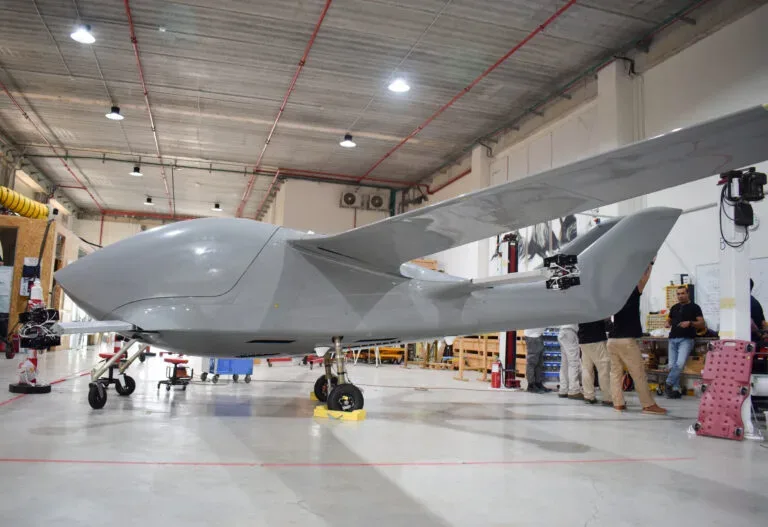
The cargo landscape just changed. AIR delivered its first production-ready electric vertical take-off and landing (eVTOL) cargo aircraft. This marks the shift from prototype to commercial-scale manufacturing.
After nearly two years of operational deployment with pre-production aircraft, AIR is ready to scale. The company plans to deliver 18 additional aircraft throughout 2026. First flight takes place in Southern Israel before entering operational service in early 2026.
Built for Real-World Cargo Operations
The production model carries a 550-pound payload. It takes off and lands vertically. No runway needed. No infrastructure headaches.
AIR’s launch customer has operated pre-production aircraft since Q4 of 2023. Beyond visual line of sight missions. Remote resupply operations. Contested environments. The aircraft performed.
That operational feedback shaped the production model. Every design choice reflects field experience, not theory.
Design Upgrades That Matter
AIR partnered with automotive manufacturer EDAG to develop the new airframe. Tier-1 automotive partners contributed. The result: robust engineering built to commercial standards.
Key Production Enhancements
- Advanced electric motors for improved performance and reliability
- Fully updated avionics suite with redundant systems
- Redundant communication and navigation equipment designed for GPS-denied environments
- Foldable wings and motor arms for compact storage and transport
- Optimized battery integration for extended range
- Larger cargo bay for flexible payload configurations
The foldable design matters for logistics operators. Store more aircraft in less space. Transport units easily. Deploy where needed.
Built for Challenging Conditions
The aircraft operates in GPS-denied environments. Redundant navigation systems maintain flight control. Communication systems stay connected.
This capability serves civilian and government needs. Commercial cargo routes. Logistics operations in contested environments. One platform, multiple applications.
Regulatory Progress and Market Validation
AIR secured an FAA airworthiness certificate. The company completed extensive beyond visual line of sight operations. Real certification. Real testing. Real results.
The market responded. AIR closed a $23 million Series A funding round. Investors see the shift from concept to commercial reality.
“This production model represents years of engineering refinement and collaboration with industry leaders, stakeholders, and regulatory bodies. We’ve moved beyond proof of concept to proven performance and commercial deployment, supported by vital partnerships. We look forward to continuing to deliver on the promise of transforming how cargo moves around the world.”
— Rani Plaut, CEO and Co-founder of AIR
Dual-Use Strategy: Cargo Today, Piloted Tomorrow
AIR operates flight testing facilities in the United States and Israel. The company runs parallel development programmes.
The uncrewed cargo aircraft enters service now. The piloted AIR ONE aircraft follows. AIR holds more than 2,900 pre-orders for AIR ONE. LSA certification unlocks that market.
This dual approach spreads development risk. Revenue from cargo operations funds piloted aircraft development. Market diversification protects growth.
What This Means for Cargo Operations
eVTOL cargo aircraft solve specific problems. Remote locations with limited infrastructure. Time-sensitive medical supplies. Emergency logistics support. High-value cargo requiring secure transport.
Operational Advantages
Traditional cargo aircraft need airports. Ground vehicles need roads. eVTOL aircraft need neither. Point-to-point delivery. Vertical operations. Direct routes.
The 550-pound payload capacity suits specific cargo profiles. Not replacing wide-body freighters. Filling gaps in the logistics network.
Reduced operating costs matter. Electric propulsion cuts fuel expenses. Lower maintenance requirements. Fewer moving parts. Better economics for specific routes.
Commercial Manufacturing at Scale
AIR moved from custom builds to serial production. Automotive manufacturing partners bring volume production expertise. Quality control systems. Supply chain management. Cost reduction through scale.
The plan: 18 aircraft deliveries in 2026. That production rate proves manufacturing capability. It validates the business model. It demonstrates market demand.
Industry Context and Competition
Multiple companies develop eVTOL aircraft. Most focus on passenger transport. AIR prioritises cargo operations. Different certification pathway. Faster time to market. Revenue generation before piloted operations begin.
The cargo-first strategy reduces regulatory complexity. Uncrewed operations face fewer certification hurdles than passenger transport. This accelerates commercial deployment.
Looking Forward
AIR’s first production delivery marks a milestone. The company transitions from aircraft manufacturer to cargo operator support. Delivering aircraft. Providing maintenance. Enabling operations.
The next 18 months prove critical. Aircraft performance in commercial service. Production ramp-up execution. Customer satisfaction. Market acceptance.
Nearly two years of operational testing provided the foundation. Now AIR must deliver at scale. The production model works. The market exists. Execution determines success.
Key Capabilities Summarised
- Vertical take-off and landing with 550 lb payload
- Operations in GPS-denied and contested environments
- Foldable design for efficient storage and transport
- Redundant systems for mission-critical reliability
- FAA airworthiness certification achieved
- Proven through nearly two years of operational deployment
The cargo industry watches. eVTOL technology moves from development to deployment. AIR leads that transition. Production aircraft delivered. Commercial operations begin. The future of cargo logistics takes flight.