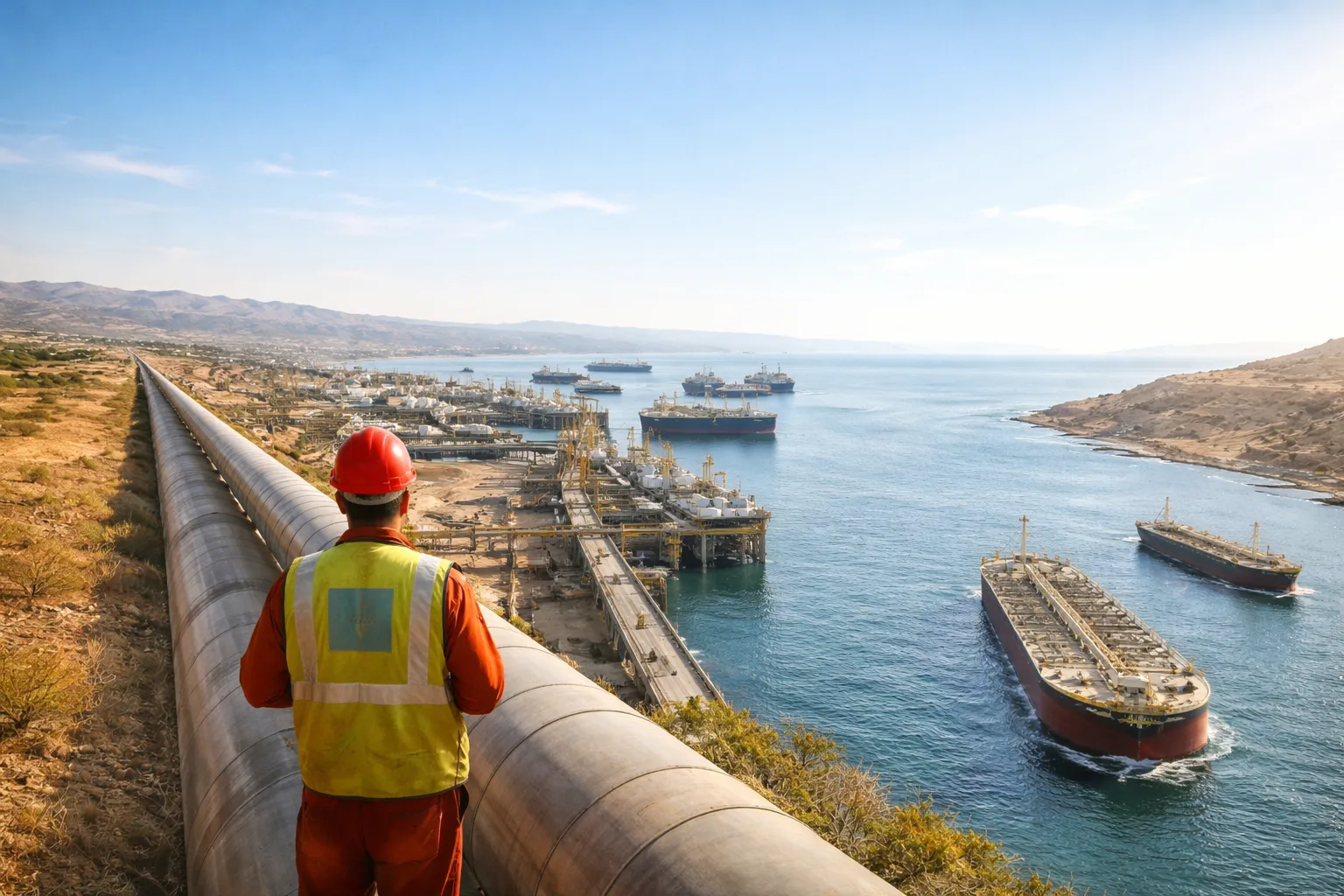
Saudi Arabia is ramping up its East-West Pipeline to full capacity as the kingdom races to bypass the effectively closed Strait of Hormuz. The move demonstrates how critical infrastructure built decades ago now serves as a lifeline for global energy markets.
The crisis has pushed Brent crude to $104.41 per barrel, with prices surging more than 40% during March 2026. It marks the biggest to global oil production on record, according to the International Energy Agency.
Pipeline Reaches Maximum Capacity
Saudi Arabia’s Petroline network now operates at its full 7 million barrels per day capacity. That’s more than double the 2.8 million barrels per day flowing before the Strait of Hormuz closure.
The system stretches roughly 1,200 kilometres from oil facilities in the eastern province to Red Sea export terminals at Yanbu. Originally completed in 1981 during the Iran-Iraq War, the pipeline started with capacity of just 1.85 million barrels per day.
“We should be reaching capacity in a couple of days. We are at more than double where we started.”
– Amin Nasser, Saudi Aramco CEO
Of the 7 million barrels moving through the pipeline, approximately 5 million barrels per day go to export terminals whilst 2 million barrels per day supply domestic refineries.
Tanker Buildup at Yanbu Port
The shift to Red Sea exports has created a bottleneck. Currently, 11 very-large crude carriers (VLCCs) sit waiting off Yanbu to load cargo. Roughly 30 VLCCs have been rerouted from Persian Gulf terminals to the Red Sea coast.
Export flows from Yanbu averaged 2.7 million barrels per day in March. That’s just above half the kingdom’s target of 5 million barrels per day. Flows increased from 1.9 million barrels in the first five days of March to 2.9 million barrels per day in the week to March 12.
Yanbu has two crude export terminals with a combined seven berths. Each berth can load approximately one VLCC per day. This infrastructure has never been tested at current volumes.
Pipeline Flow Creates Time Lag
Oil moves through pipelines at between three and eight miles per hour. That means it takes anywhere from four to 10 days for crude increases at the Abqaiq processing facility to show up at Yanbu terminals.
“This crisis happened all of a sudden and tankers need to reposition to the west coast for loading.”
– Amin Nasser, Saudi Aramco CEO
The Saudi Ports Authority (Mawani) and Aramco Trading have introduced a new ship-to-ship transfer service at King Fahad Industrial Port in Yanbu to speed loading operations.
New Shipping Routes Emerge
Most Yanbu shipments now head toward Asia instead of traditional deliveries to Egypt’s Sumed pipeline and Mediterranean markets. This routing change adds complexity to global cargo flows.
The shift demonstrates how geopolitical disruptions force rapid changes to established trade lanes. Freight forwarders handling oil-related cargo must track these evolving patterns to quote and route shipments effectively.
Regional Pipelines Partially Offset Hormuz Closure
The Strait of Hormuz normally handles approximately 20 million barrels per day of oil and liquefied natural gas. That represents roughly 20% of global oil shipments.
Saudi Arabia’s Petroline allows the kingdom to sustain approximately 70% of its usual export volume of 7 million barrels per day. But regional bypass infrastructure can only partially offset the strait closure.
- Saudi Petroline: 7 million barrels per day capacity
- UAE Abu Dhabi Crude Oil Pipeline (ADCOP): 1.5-1.8 million barrels per day to Fujairah
- Combined bypass capacity: roughly 8.5-8.8 million barrels per day
- Normal Hormuz flow: 20 million barrels per day
That leaves a significant gap. The remaining crude must either stay in storage or wait for the strait to reopen.
Security Risks Shift West
Bypassing Hormuz doesn’t eliminate security concerns. Oil routed through Yanbu must still pass the Bab el-Mandeb strait to reach Asian and European markets.
Western export terminals have become potential targets. Saudi Arabia maintains massive storage capacity at facilities like Ras Tanura, which holds around 300 million barrels combined across its tank farms.
The kingdom also has more than 2 million barrels per day of spare production capacity. This buffer helps manage supply during disruptions, but doesn’t solve transportation challenges.
Price Impact and Global Consequences
Oil markets have responded sharply to the crisis. US WTI crude reached $99.25 per barrel, pushing close to the psychologically significant $100 mark alongside Brent’s climb past $104.
The 40% price surge in March 2026 ripples through global supply chains. Higher fuel costs affect freight rates across all modes. Cargo solutions providers must factor these increases into quotes and help clients navigate volatile pricing.
“There would be catastrophic consequences for the world’s oil markets the longer the goes on.”
– Amin Nasser, Saudi Aramco CEO
What This Means for Freight Forwarders
The Hormuz crisis demonstrates how quickly established shipping routes can shift. Freight forwarders handling energy-related cargo, petrochemicals or materials dependent on oil pricing face several immediate challenges:
- Route changes: Traditional Persian Gulf to Mediterranean lanes now route via Red Sea
- Capacity constraints: VLCC availability shifts as vessels reposition
- Price volatility: Fuel surcharges and rate fluctuations require faster quote updates
- Alternative routings: Clients need options as primary lanes face delays
The ability to quote complex, multi-leg routes quickly becomes essential. Forwarders who can compare carrier options and present alternatives fast will win more business during.
Saudi Arabia’s pipeline response shows how infrastructure built for past crises now addresses present challenges. For freight professionals, the lesson is clear: flexibility, speed and access to global capacity networks matter more than ever when geopolitical events reshape trade flows overnight.