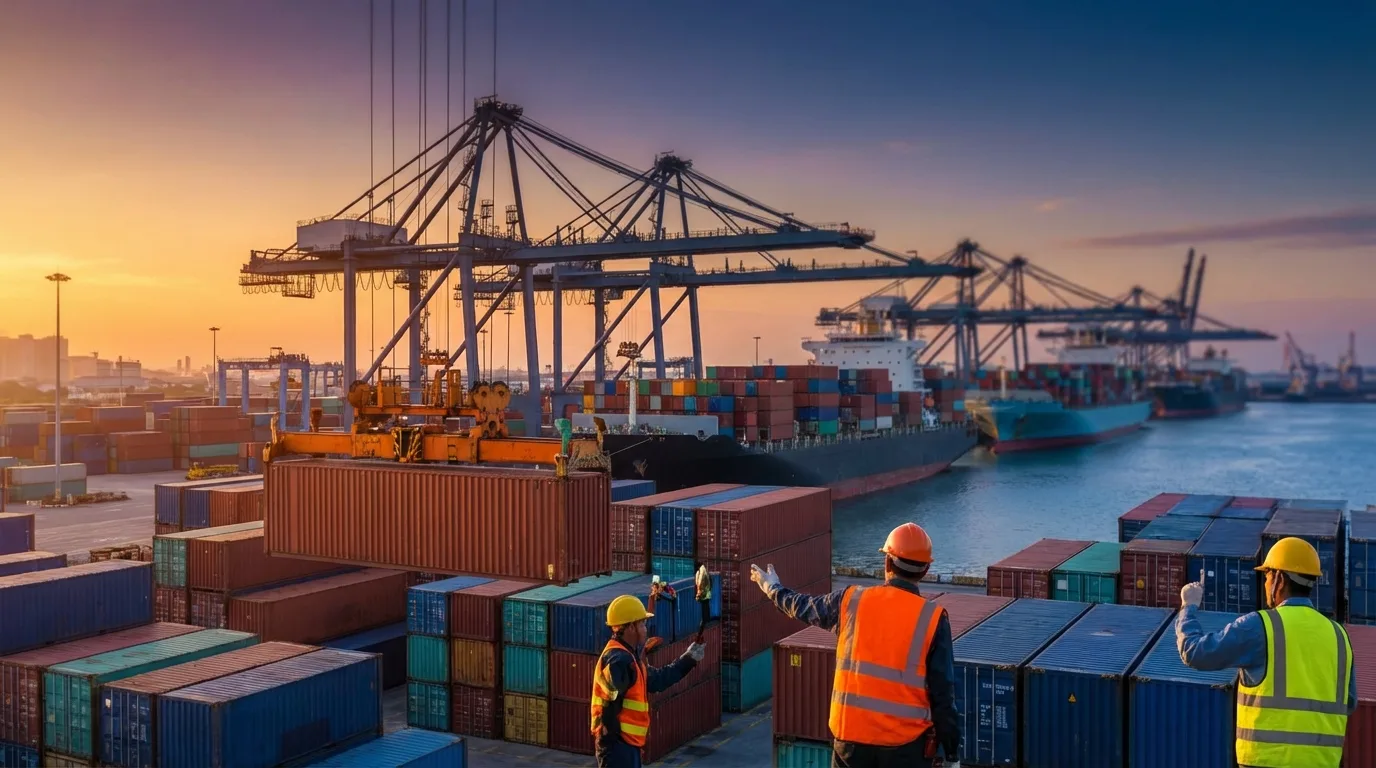
The Strait of Hormuz, a 33-kilometre-wide passage between Iran and Oman, stopped functioning as a global trade artery on 4 March 2026. Iran closed it after Operation Epic Fury, a coordinated US-Israeli air campaign that began on 28 February and resulted in the death of Iran’s Supreme Leader. Roughly 3,000 vessels transited monthly before the closure. Today, only 5% of that volume moves through.
The bottleneck normally carries 11 million barrels of oil and 140 billion cubic metres of gas daily. Brent crude has climbed above $90 per barrel. The International Energy Agency calls it the largest supply in oil market history. The US counter-blockade of Iranian ports on 13 April added another layer of friction. China negotiated passage for its flagged vessels and now absorbs 90% of Iranian oil exports, maintaining access while others divert.
Fertiliser and Food Security Under Threat
The Arabian Gulf accounts for 46% of global urea trade. India takes 18% of those exports, Brazil 10%, and China 8%. With 25-35% of global fertiliser supplies passing through the strait, prices are climbing and agricultural supply chains face strain. Nearly half of all seaborne sulfur trade also moves through the passage, affecting soil amendments and industrial chemistry worldwide.

Markets move fast. Your quoting should too.
See live rates, compare options and manage shipments in one workflow.
Dosym Satpayev, director of the Risk Assessment Group in Almaty, notes the damage extends beyond immediate logistics: “Even if the Strait of Hormuz is reopened, I believe that the image of it as a stable transport and logistics route has been damaged for many years, if not permanently.” Developing economies already stretched by debt service costs now face higher energy and food import bills with limited fiscal headroom.
Middle Corridor Gets $3.3 Billion Infrastructure Push
The World Bank and partners committed $3.3 billion in mid-April to strengthen the Middle Corridor, also called the Trans-Caspian International Transport Route. The corridor links China and Europe via Kazakhstan, Azerbaijan, Georgia, and Turkey. Turkey’s Istanbul North Rail Crossing received $1.9 billion, while Kazakhstan’s Karagandy-Zhezkazgan highway reconstruction got $1.4 billion. The Baku-Tbilisi-Kars Railway is targeting 17 million tonnes capacity by 2034.
Turkish Vice President Cevdet Yılmaz framed the shift bluntly: “The Northern Corridor has become unpredictable due to geopolitical tensions. The southern route is pushing the limits of its capacity. This situation has made the Middle Corridor not an alternative but a mandatory choice.” Turkey, Syria, and Jordan signed a memorandum in September 2025 to revive the historic Hejaz Railway, built between 1900 and 1908. Turkey committed to rebuild 30 kilometres of missing Syrian track, creating a north-south route to the Arabian Peninsula that bypasses maritime chokepoints entirely.
Industrial Metals and Green Energy at Risk
The Middle East produces 9% of global primary aluminium outside China. Over 150,000 tonnes have been pulled from London Metal Exchange warehouses since the crisis began. Qatar supplies a third of the world’s helium, critical for MRI machines and semiconductor manufacturing. One-third of global methanol trade and 6.5 million tonnes of monoethylene glycol (MEG) shipped in 2025 moved through the strait, feeding plastics, textiles, and packaging supply chains.
Battery material supply chains face from blocked sulfur and graphite feedstocks. The green energy transition depends on steady flows of these inputs for electric vehicles and renewable energy infrastructure. Temur Umarov from the Carnegie Endowment for International Peace warns that expectations for the Middle Corridor remain premature: “The Middle Corridor, however interesting and potentially ambitious it may appear, is not yet developed to a level where it can replace the northern flows through Russia.”
What This Means for Freight Forwarders
The closure demonstrates how quickly geopolitical shocks propagate through supply chains built on concentrated geography. Forwarders routing energy, fertiliser, metals, or chemicals from the Gulf now face extended transit times, higher insurance premiums, and volatile bunker fuel costs. The Middle Corridor offers an alternative, but infrastructure gaps and capacity constraints mean it cannot absorb the diverted volume yet. Quoting complex multi-leg routes across Central Asia requires tools that compare A2A and D2D options fast, without the delays of email chains and spreadsheet juggling.
SUBSCRIBE TO FAST FORWARDER
YOUR INDUSTRY INTELLIGENCE HUB
Fast Forwarder gives you weekly market insights, rate trends and industry intelligence.
*UNSUBSCRIBE ANYTIME. WE DON’T SEND SPAM.

Freight operations need platforms that handle multi-carrier, mixed-mode routing in one screen, delivering accurate quotes in minutes rather than hours. As clients demand supply chain resilience and diversified routing, the ability to between corridors and compare real-time capacity becomes a competitive advantage. The crisis is not temporary. Even after reopening, shippers will permanently diversify away from single-point-of-failure routes.
Frequently Asked Questions
Why is the Strait of Hormuz so critical to global trade?
The strait carries roughly a quarter of global seaborne oil, 20% of LNG, 46% of urea fertiliser exports, and nearly half of seaborne sulfur trade. It connects Gulf producers to Asian and European markets. No alternative maritime route exists for Gulf exports without adding thousands of kilometres and weeks of transit time.
What caused the March 2026 closure?
Iran’s Revolutionary Guard closed the strait on 4 March 2026 in response to Operation Epic Fury, a US-Israeli air campaign launched on 28 February that resulted in the death of Supreme Leader Ali Khamenei. The US imposed a counter-blockade of Iranian ports on 13 April.
Can the Middle Corridor replace the Strait of Hormuz?
Not yet. The Middle Corridor lacks the rail capacity, road quality, and border processing speed to absorb diverted Gulf trade volumes. The World Bank committed $3.3 billion in April 2026 to address bottlenecks, but full capacity will take years to build. The route offers diversification, not substitution.
Which commodities face the greatest?
Oil, LNG, urea fertiliser, sulfur, methanol, MEG, aluminium, and helium face the most immediate impact. Agricultural economies dependent on Gulf fertiliser imports and manufacturers relying on chemical feedstocks are particularly exposed.
How are freight rates responding?
Bunker fuel costs, insurance premiums, and freight rates on alternative routes have all risen. Routing via the Middle Corridor adds cost and transit time compared to direct maritime shipments. Clients are prioritising supply chain security over lowest cost, shifting procurement strategies permanently.
The Strait of Hormuz crisis is forcing a structural shift in how global supply chains are designed. Single points of failure are no longer acceptable. Cargo Solutions Network was built for exactly this environment: compare routes, book capacity, and track shipments across borders without platform fees or territory limits. Sign up free and start quoting today.