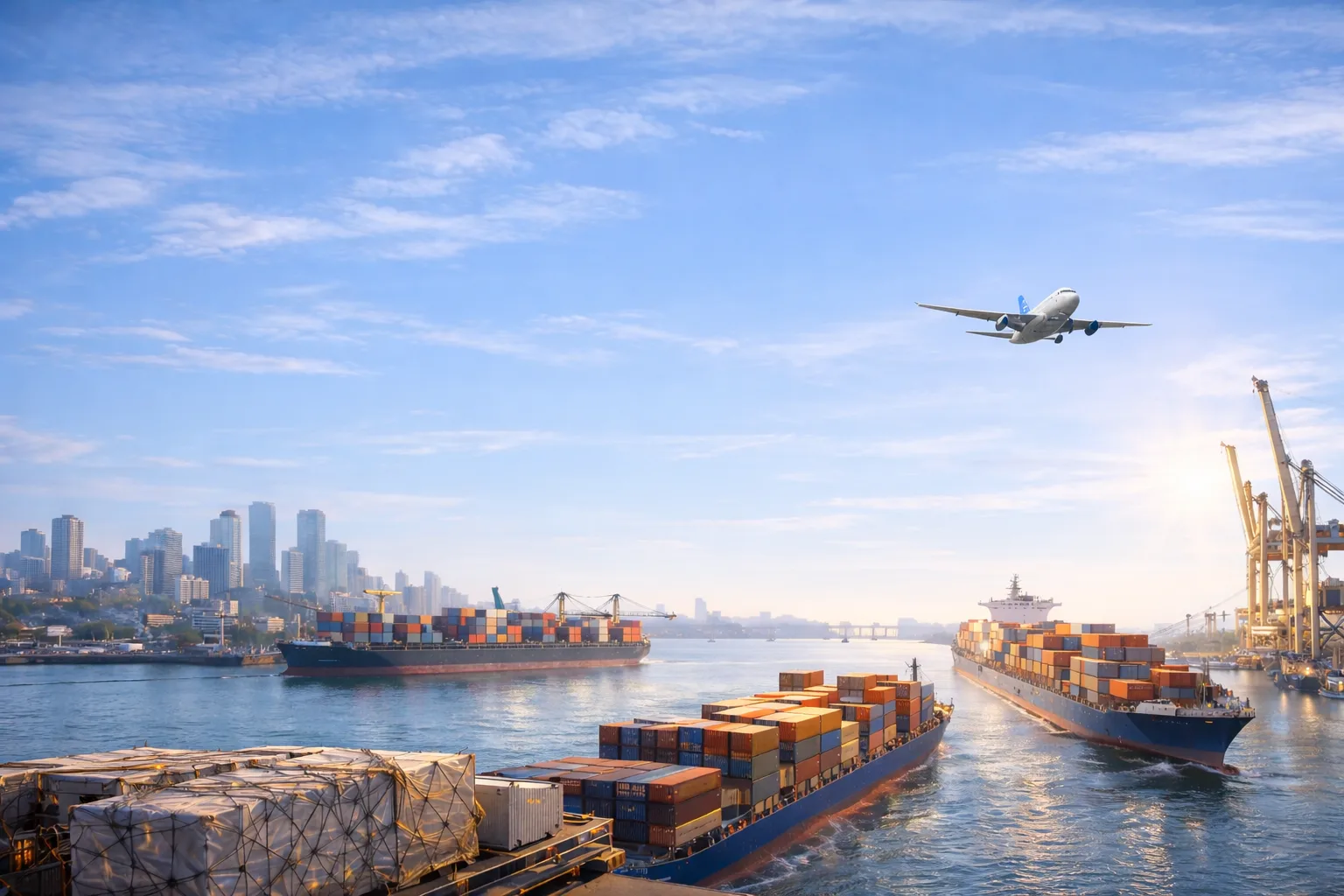
The supply chain landscape is undergoing its most dramatic shift in a decade. Trade volatility, labour constraints, and regulatory pressure are converging with rapid AI adoption to reshape how freight forwarders quote, book, and ship.
According to the 2025 MHI/Deloitte Annual Industry Report, 55% of supply chain leaders are increasing technology investments. Another 45% plan to purchase automation equipment in the next three years. The message is clear: businesses that move fast will win. Those that wait will lose ground.
Here are the five strategic shifts defining 2026-and what they mean for independent freight forwarders.
1. Multi-Tier Transparency Is Now Mandatory
Regulations like the Uyghur Forced Labor Prevention Act, EU Deforestation Regulation, and the new EU Digital Product Passport demand visibility beyond tier-one suppliers. Non-compliance brings fines, shipment holds, and loss of market access.
Forwarders must track provenance, document compliance, and prove chain of custody across multiple tiers. This is no longer a nice-to-have. It’s a cost of entry.
“Supply chains today face near-constant turbulence and in an era that many describe as a permacrisis.”
– World Economic Forum
The freight forwarders who thrive will be those who integrate compliance into quoting and booking workflows. Visibility must be built in, not bolted on.
2. AI Forecasting Becomes the New Standard
AI-driven forecasting is moving from pilot projects to operational deployment. McKinsey reports that over 62% of surveyed organizations are experimenting with agentic AI for supply chain operations. Yet according to Gartner research, just under a quarter of supply chain leaders have a formal AI strategy in place.
The gap is closing fast. In 2026, AI will shift from standalone tools to embedded platforms within Source-to-Pay systems and planning tools.
But the winners will be those who deploy AI strategically. AI-driven forecasting reduces errors, lowers safety stock levels, cuts stockouts, and frees up capital tied in inventory. Modern AI tools can identify outlier sales, track customer purchase intervals, and prevent overbuying of obsolete stock.
For freight forwarders, this means faster, smarter quoting. Real-time decision-making across thousands of SKUs. Less manual guesswork. More wins.

3. Warehouse Automation Targets the 50% Problem
Picking in warehouses consumes up to 50% of working hours in travel time. That’s wasted capacity. McKinsey reports that logistics and fulfillment companies are dedicating over a third of capital expenditures to automation.
The focus is on labour-intensive processes: picking, sorting, and fulfillment. Automation addresses two problems at once-labour shortages and speed.
Forwarders partnering with automated facilities will quote faster, ship faster, and deliver better margins. Those relying on manual workflows will fall behind.
4. Lead Times Extend and Becomes Permanent
Lead times in many industries are now 90 to 150+ days as standard-still higher than pre-pandemic peaks. Supply chain disruptions are no longer temporary. They are the baseline operating environment.
“Winners in 2026 will be those that recognize critical decision points early and convert them into action to reshape operations quickly.”
– Per Hong, Global Lead, Kearney Foresight
This demands a shift in planning horizons. Forwarders must move from short-term tactical responses to mid- and long-term strategic positioning.
Key tactics include:
- Supplier diversification: Expand your network to reduce single-source risk
- Production relocation: Move closer to key markets where feasible
- Strategic inventory positioning: Hold extra stock in key regions
- Scenario planning tools: Use AI-powered simulators to test alternative flows before tariffs or policies hit
Tariff-management platforms and digital scenario planning tools help leaders test options before implementation. Speed to decision equals competitive advantage.
5. Trade Volatility and Tariff Uncertainty Require Agility
The United States-Mexico-Canada Agreement faces a looming review in summer 2026. Trump’s tariff regime continues to test supply chains. The Port of Los Angeles is expecting volume declines in 2026 compared to the frontloading spikes of 2025.
Companies frontloaded cargo ahead of tariff implementation dates in 2025. But that tactic has limits. In 2026, the focus shifts to structural agility.
“I think we’ll see a normalization in 2026 and perhaps a return to more of the usual flows of inventory.”
– Jess Dankert, VP of Supply Chain, Retail Industry Leaders Association
Economic turbulence will test planning and pricing across sectors. Overall consumer spending remained resilient in 2025 but is expected to decelerate in 2026. Affordability concerns and a softening labour market are putting pressure on demand.
Forwarders must optimize global manufacturing and distribution networks. This may mean plant closures, distribution consolidation, and a renewed focus on transportation cost management.
“Transportation cost is like car insurance: You should quote it out every couple years because if you’re not requoting, you’re probably paying more than you need to.”
– Matt Stekier, Principal, Plante Moran
What This Means for Freight Forwarders
The complexity is real. The pressure is increasing. But the opportunity is massive for those who move fast.
Forwarders who invest in visibility, automation, AI-driven quoting, and agile networks will win more business. Those who rely on email chains, spreadsheets, and manual workflows will lose ground.
The good news? The tools exist. Platforms that enable multi-carrier comparison, door-to-door booking, and real-time tracking are available now. No subscription fees. No platform tax. No territory limits.
The question is: will you move first, or watch competitors pull ahead?
Quote faster. Ship smarter. Win more cargo. That’s the 2026 playbook.